

Zoos across the world have come under scrutiny after activists brought attention to the cruelty animals often suffer in captivity. Internet sensations like “Tiger King” and “Blackfish” educated the public about exotic animals and exposed how they are often mistreated for profit. Headlines like “Lolita the Captive Orca Is Sick at Miami Seaquarium,” continue to draw protestors outside of the aquarium on Virginia Key. However, Zoo Miami welcomed more than 1 million visitors in 2021, breaking all previous records, according to ZooMiami.org.
Zoo Miami’s mission is, “to encourage an appreciation for the world’s wildlife and help conserve it for future generations,” as stated on miamidade.gov. The zoo has kept this promise in numerous ways, and it may explain why visitors have no hesitation buying tickets during their vacation.
Zoo Miami is not only the oldest but the largest zoological garden in Florida. The zoo is located in southwest Miami-Dade County, just off of the Florida Turnpike Extension at Exit 18. The entrance directs visitors down a long road lined with swaying palm trees. The street signs caution visitors to drive slowly as turtles are often crossing. This 740-acre parcel of land is not only home to many exotic animals but is also home to multiple indigenous species of butterflies and turtles.
I arrived at the parking lot pleased to find out that parking is completely free. In the lot, parents unloaded strollers and strapped in their children. But the zoo does not only attract families. Couples and individuals roamed the grounds as well on rented Safari Cycles or by foot.
I would recommend reserving a Safari Cycle in advance of your visit. By the time I had seen all the animals, I had logged 8,000 steps and spent two hours. Reserving rentals can be done
online and ensures that you’ll have a roof over your head if it starts to rain. Strollers and wheelchairs are also available.
Once you’ve scanned your tickets, take a deep breath before running over to the tiger exhibit. Spend some time looking at the Zoo’s map. Take a picture of it to refer to along the way. The zoo is methodically divided into sections of animals that are native to the same continent. The animals come from Asia, Africa, Australia and the Amazon. There is also a section dedicated to animals native to Florida. Whichever path you choose to embark on first, remember to keep an eye out for all of the activities offered along the way.
At the moment, multiple activities remain closed for improvements including the pedal boat rental, rhino feeding and wildlife carousel. However, other exciting activities remain open. Two activities I especially enjoyed were the giraffe and parrot feedings. The parrot feeding cost five dollars per cup of nectar. The parrots promptly landed on my shoulders and drank the nectar from the cup.
Silvia Manrique is an interpretive program attendant overseeing the parrot feeding.
“At the Galapagos Islands, you can’t get up close to a tortoise. We have our tortoise encounter here and you can actually get up close,” she said as the birds squawked in the background.
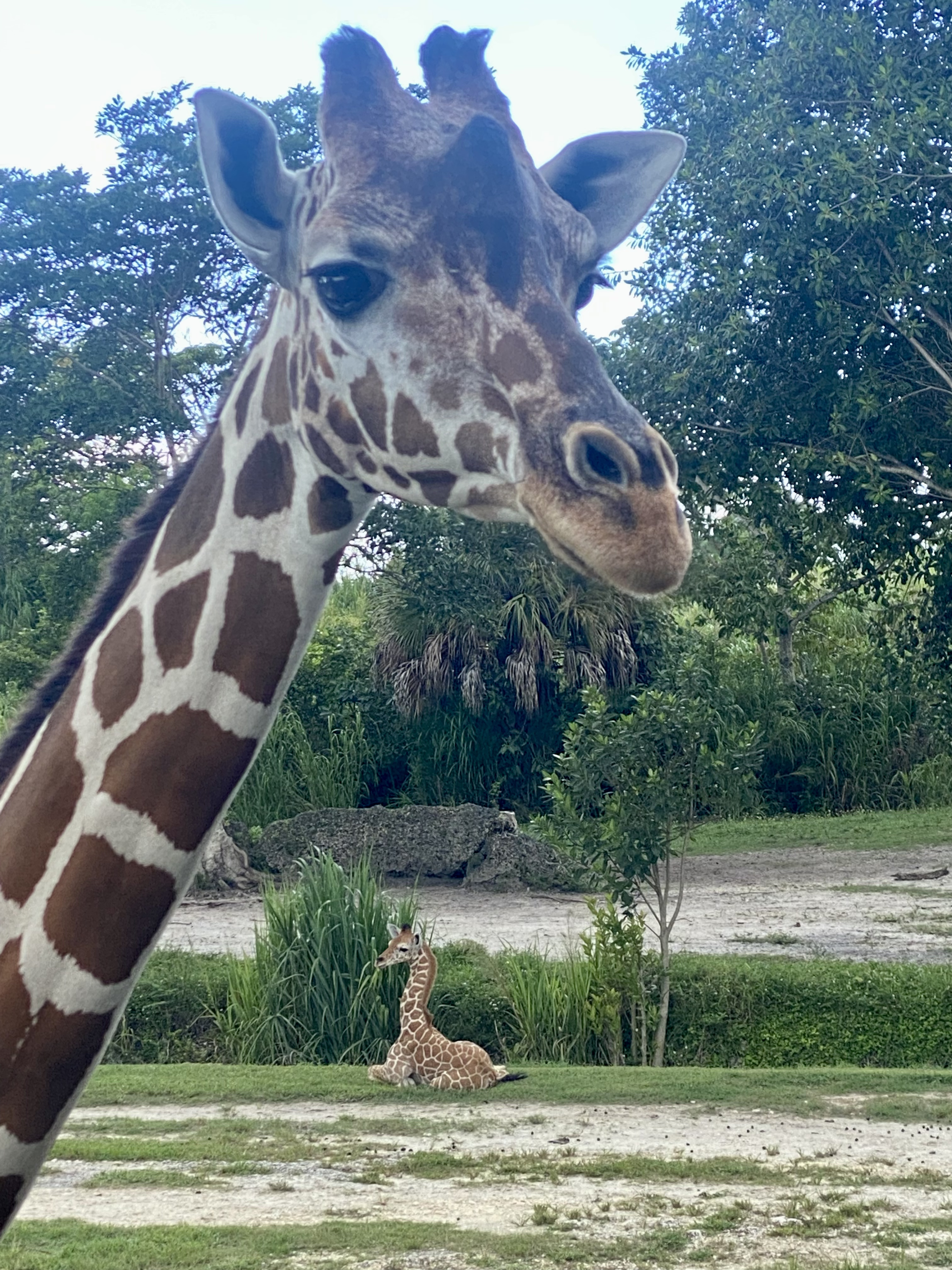
The activities offered throughout the park allow kids, and oftentimes adults, to learn more about nature. As I stood in front of the giraffe whose tongue reached out toward me, I got a sense of their sheer size and developed a newfound respect for the lanky horses of the animal kingdom.
Not only does the zoo provide visitors with great experiences but the profit made from ticket sales is cycled back into the zoo for medical treatments and exhibit improvements. Behind
the scenes, the zoo conducts research to preserve species and rehabilitates animals that have been injured in the wild.
Anna Caraballo and Toby Sturlock, visiting from Texas, spent their last day of vacation with a friend at Miami Zoo. Caraballo often visits zoos and was surprised by the size of the animals’ habitats.
“I feel like the architecture of the habitats is a lot nicer than a lot of zoos we’ve been to. It seems like their habitats are very good for their species,” Sturlock said, adding, “especially in this heat.”
Rosemary Lucas, hospital manager at Zoo Miami and certified vet tech, spends her days overseeing the health of around 3,000 to 4,000 animals.
“What that means is we do preventative healthcare for the animals here at the zoo,” Lucas said. “We give them vaccines, we do routine blood work, we try to keep them as healthy as possible, kind of like it is in human medicine. Prevention is better than treatment.”
Lucas and her team also provide general healthcare to support aging animals suffering from arthritis and other wounds.
“When animals are in the care of the hospital, we’re not just worrying about their physical health, but we also worry about mental well-being. So, we also do enrichment,” Lucas said. The zoo provides PVC pipes for sea turtles to hide under and brushes with which to scrub themselves. Wild birds are provided boxes to play in as well.
Lucas explained that Zoo Miami utilizes species survival plans (SSP) at the zoo. Lucas characterized the program as a “Tinder for animals.” SSP data is accessible for all major zoos through the Association of Zoos and Aquariums (AZA). These zoos can breed their animals with
other AZA zoos to acquire ideal genetics. The science is based on lineage and family trees, according to Lucas.
Zoo Miami’s giraffe program has grown because giraffes experienced a massive, worldwide die-off and are at risk of extinction. The SSP program is the reason 57 giraffes have been born at their facility. Zoo Miami is the only zoo in the United States within a subtropical climate which makes the environment even more conducive to breeding and keeping giraffes.
“They are actually one of the more important species in zoos and aquariums right now because their populations are dying so quickly in the wild, that we could potentially, in the foreseeable future only end up with giraffes in captivity,” Lucas said.
Lucas also oversees the new sea turtle hospital that opened on July 5. It is located across from the zoo’s main hospital. The sea turtle hospital is operated by four vets and multiple vet techs. It also serves as an area of conservation for endangered species of butterflies.
The sea turtle tanks are eight feet wide by four feet deep. Visitors can view the turtles through mirrors over the tanks rather than through windows on the side of the tanks. This protects the animals from being disturbed by intense light. The facility has taken in five sea turtles since opening. One has been released, one was moved to Loggerhead Marinelife Center and three have been euthanized due to their injuries.
There are far too few opportunities in life to see an elephant or giraffe in person. While zoos and aquariums often exploit their animals, Zoo Miami seems to have developed a team of animal-loving staff that strives to maintain the well-being of their animals and to educate visitors about the importance of conservation. If you’re looking for an outdoor activity fit for all ages, visit zoomiami.org for ticket sales and more information.




 Catherine McGrath
Leave a comment